
SO-NUTS: new insights for the prevention of sarcopenic obesity
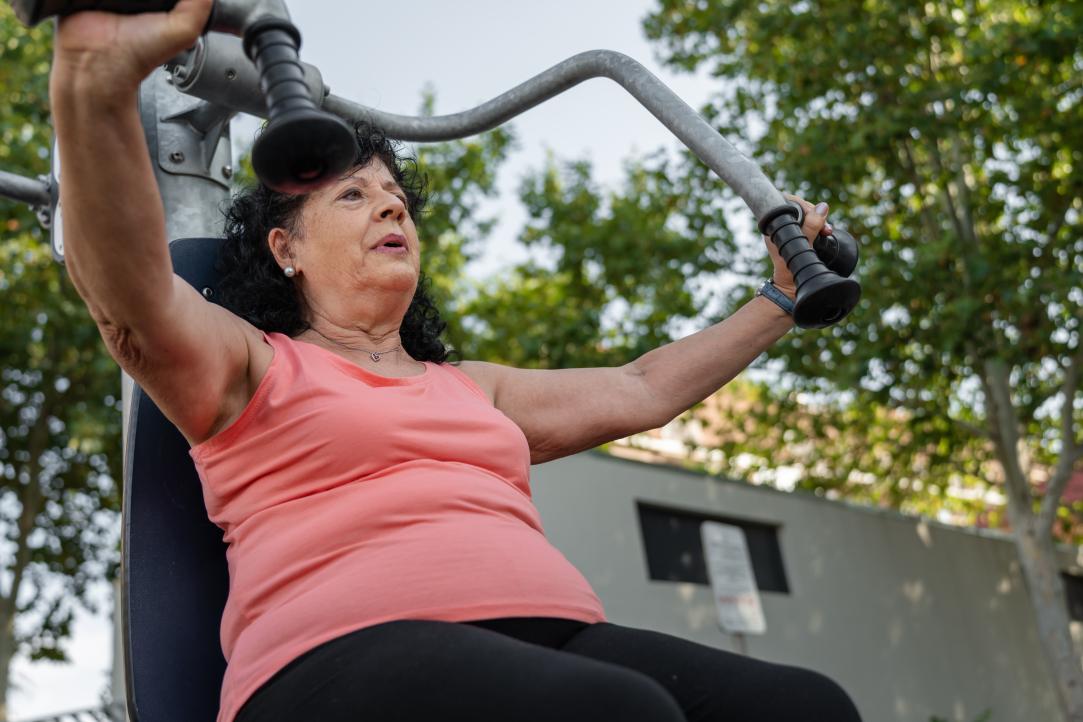
The international SO-NUTS consortium focused on sarcopenic obesity: the combination of muscle loss and overweight in older adults. An interdisciplinary team developed new knowledge, an early risk indicator and a prototype lifestyle app. The project has concluded and continues with the practice-oriented SONETTO project.
SO-NUTS was funded by HDHL. Partners from the Netherlands (University of Applied Sciences of Amsterdam HvA and Erasmus MC), Austria, France, Spain and the Czech Republic were involved in the research. Josje Schoufour, associate professor at HvA, was involved in the SO-NUTS project as a researcher from the Netherlands.
More insight into sarcopenic obesity
SO-NUTS has delivered important insights on multiple fronts. ‘It is quite difficult to name just one,’ Schoufour explains. ‘I think that with a strong consortium we contributed to a better understanding of sarcopenic obesity and gained important insights into how we can prevent it.’
One key outcome is the development of the Sarcopenic Obesity Phenotype Index (SOPi). ‘By designing a measure that can assess risk long before an official diagnosis of sarcopenic obesity, I think we have developed an important tool.’
Conversations with end users of the developed app also provided many new insights. ‘We learned a lot about how to best support older adults in increasing physical activity, particularly strength training, and in eating more healthily, for example ensuring sufficient protein intake. Strength training is essential to counteract muscle loss and functional decline as much as possible, and sufficient dietary protein is needed for this. We have also deliberately focused on the fact that with weight loss, especially when it happens quickly, there is an undesirable loss of muscle mass. That is why the combination of healthy nutrition with high protein intake and sufficient physical activity and strength training is so important.’
In addition, the project provided insight into the role of technology in this context. ‘We now have a better understanding of what the technology should look like and how it should function. The app should, for example, have a simple interface with high contrast and user-friendly language, step-by-step guidance, not too much information at once, and no jargon, as well as personal goals, personalised advice, progress monitoring, a chat function, and social interaction with peers.
Ultimately, you end up with a product that has been viewed from multiple areas of expertise, and that is very important for the quality and usability of the final result.
What it will take to move from insight to implementation
Within SO-NUTS, nutritionists, exercise scientists, physicians, ICT specialists, designers and behavioural scientists worked closely together. This multidisciplinary approach took time at the beginning but proved to be the strength of the project. ‘The collaboration between the partners was very strong. At first, you need to learn to understand each other and it may take a bit more time to reach decisions,’ Schoufour explains. ‘But in the end, you create a product that has been viewed from different areas of expertise, and that is very important for the quality and usability of the final result.’
Because of the broad consortium, the results have also been widely shared internationally. ‘Not only does this create impact with the SO-NUTS results, but it also brings more attention to sarcopenic obesity in general. That is very valuable and important!’
Lessons from developing the app
Within the project, a prototype app was developed to support older adults in eating more healthily and increasing physical activity. This generated many practical insights into app development in research. ‘It is important to define in advance what the goal of the app is within the project,’ Schoufour explains. ‘If your goal is mainly to gain insight into design and use, then it is best to build it yourself so you can control everything, as we did in SO-NUTS.’
‘The step towards an app that can truly be used in practice remains a big one. If that is the goal, it may be useful to collaborate from the start with a platform that can also host the app.’ These experiences form an important basis for follow-up research within SONETTO, which focuses more on implementation, scaling and real-world app.
Follow-up in SONETTO: from research to practice
‘The follow-up to SO-NUTS is SONETTO. In this project, we build on the insights and products from SO-NUTS and work towards a renewed app that can be used in practice, while also involving healthcare professionals in delivering the intervention,’ Schoufour explains. ‘We use an existing platform with a wide range of technical possibilities, which we know from SO-NUTS are important.’
SO-NUTS clearly showed what users need. ‘Participants want contact with a researcher or healthcare professional, but also with other participants. They want to work on small habits, monitor their progress, set goals, receive positive feedback, and have a clear agenda with tasks.’
At the same time, an important limitation became visible. ‘In a “stand-alone” app, participants miss the human aspect of guidance. That is why in SONETTO we are developing an app focused on “blended care”, where, in addition to the app, the lifestyle professional plays an important role. We are also developing e-learning modules for lifestyle professionals on how to use technology and e-health in their guidance.’
Stepping outside the comfort zone
Finally, Schoufour emphasises the importance of collaboration and co-creation. ‘It is good to occasionally step outside your comfort zone. By involving end users from the start and collaborating with other disciplines, you gain new insights and increase impact.’
More information about SO-NUTS, sarcopenic obesity and practical advice on nutrition, physical activity and lifestyle can be found on the SO-NUTS website (currently only available in Dutch).
Note: This article is an English translation of the original Dutch news article published on the ZonMw website.