
EarlyMicroHealth
Impact of early life diet on microbiome development & later health
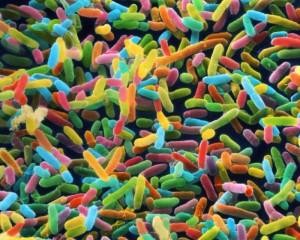
Microbial colonization of the new-born is essential for the development of the physiological homeostasis of the host. Perturbations of early-life colonization may have long-lasting effects on host health; specific alterations seem to precede the development of disease, including both communicable and non-communicable diseases. Thus, early microbiota establishment has a profound effect on long-term well-being, therefore representing a critical opportunity for microbiota modulation. Perhaps with the exception of delivery mode and breast/formula-feeding, little was known about the influence of early-life factors on the microbiota establishment. In this context the EarlyMicroHealth project aimed at at unravelling the process of intestinal microbiota establishment in infants and to deduce ways to positively modulate this process. This was done by a longitudinal cohort study, evaluating factors, such as gestational age, antibiotics exposure, etc., that negatively impact early-life microbiota development and the impact of diet and nutrition during the first years of life in driving this process. In a second step the impact of interventions, such as omega three fatty acids or probiotics, in minimizing the impact of these factors was assessed. To achieve this aim we formed a multidisciplinary consortium comprising 5 partners from 4 European countries representing: microbiologists, nutritionists, neonatologists, paediatricians, experts in OMICs and Next-Generation Sequencing and bio-informaticians. The exhaustive analyses of the infant microbiome (including phageome, resistome, etc.) and its combination and integration with clinical and nutritional data allowed determining the impact of different early factors on the microbiota development. The knowledge and tools generated within the project offer opportunities for a stronger European Research Area and increasing European competitiveness on the development and commercialization of microbiota-modulating products for infancy.
Consortium
| Partner Organization | Partner Country |
|---|---|
| Wageningen University | Netherlands |
| University College Cork | Ireland |
| Complutense University of Madrid | Spain |
| Università degli Studi di Parma | Italy |
Highlights
The project has studies the impact of early factors, feeding and postweaning nutrition on the development of the microbiome. By doing this the project has;
- Developed bioinformatic tools for ITS-based profiling of Bifidobacterium genus species/subspecies and for phageome analyses.
- Developed food composition tables for commercial foods targeted to infants between 0 and 12 months of age.
- Identified by first time a phase variation shufflon in bifidobacteria
- Identified differences on microbiota development between preterm and fullterm neonates
- Unravelled the effects of intrapartum antimicrobial prophylaxis on the neonatal microbiome
- Determined the impact of antibiotic exposure during the 1st year of life on microbiome development.
- Demonstrated the vertical transmission of microorganisms and bacteriophages,
- Underlined the relationship between early microbiota and weight gain in preterm infants.
- Determined the interaction nutrition-microbiome development during the first years of life.