
METARYL
Nutrition and aryl hydrocarbon receptoractivation in mesenteric adipose tissueinflammation and intestinal surgical site
Abstract
Obesity and sedentary lifestyles are facing society with an increasing burden of affiliated health problems such as metabolic syndrome, cardiovascular disease, and type 2 diabetes. Such conditions also worsen the risk of wound infections after surgeries such as those associated with bariatric gastric surgeries.
This type of weight loss surgery is sometimes used as a treatment for people who are very obese. It can lead to significant weight loss and help improve risk for type 2 diabetes or high blood pressure. Obesity and Metabolic syndrome are known significant risk factors for infections in general and surgical site infection (SSI) after abdominal surgery.
However, the cause-and-effect relationship between nutrition, the immune response, and healing of a wound after surgery of the gastro-intestinal tract in people with obesity remains unknown. Also, the research tries to understand how nutrition affects the development of obesity-induced type 2 diabetes through inflammation of fat tissue. With our research project we aim to understand better how nutrition affects wound healing and type2 diabetes, where we focus on the essential amino acid tryptophan, an element of protein.
First, we study how tryptophan metabolites affect the development of wound infections
Second we determine how inflammation of the fat tissue in the abdomen plays a role in the development of type2 diabetes. Thirdly, we will test dietary interventions in this process, to help people cope with this problem.
In this collaboration we achieve this with multiple academic partners from France (INSERM, Paris), Germany (UK Bonn) and the Netherlands (Amsterdam UMC) and companies, including HOR(AI)ZON BV.
Understanding why and how obesity affects infection risk and diabetes, has large societal impact. Lowering the incidence of wound infections, for instance after surgery, will significantly reduce, morbidity, mortality and hospitalization and will improve quality of life. Elucidating the role of tryptophan metabolites in wound healing healing and diabetes will also provide numerous valorisation opportunities including the (commercial) development of microbiota-based therapeutics and/or medical devices.
Currently, wound infections lead to re-hospitalization (surgery, ICU stay), antibiotics treatment and prolonged hospital stay, all strongly impacting healthcare costs. Therefore, the use of nutritional interventions can become part of standard of care for prevention of infections.
Consortium
| Partner Organization | Partner Country |
|---|---|
| Amsterdam UMC | The Netherlands |
| Sorbonne Université | France |
| Universitätsklinikum Bonn | Germany |
| Horaizon BV | The Netherlands |
Reports
Progress
We have been able to demonstrate that the essential dietary component and amino acid tryptophan can be converted by the microbiota to improve wound healing after surgery. We have identified microbes that are efficient in converting tryptophan to achieve this effect. Also, in human studies and mouse models, we were able to show that high tryptophan diets and high resulting metabolites of tryptophan are associated with better wound healing of the intestine after surgery. These data indicate a possible beneficial mechanism of nutritional tryptophan and the microbes that can convert it in recovery of intestinal surgeries and in reducing infections and sepsis.
Related news
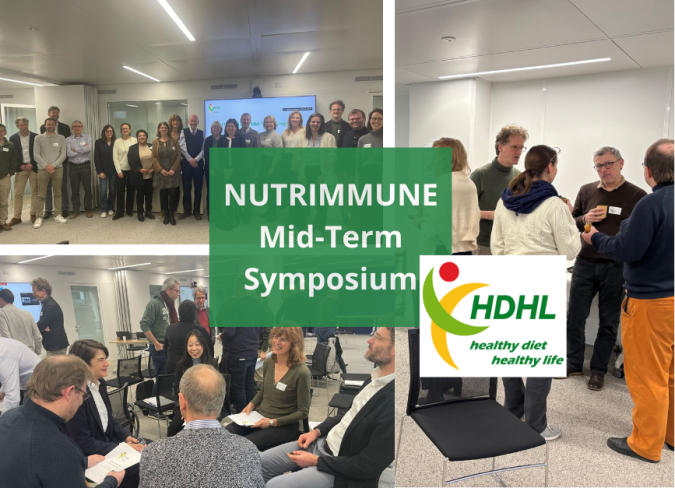
NUTRIMMUNE project results presented at mid-term symposium in Paris
On 11 February 2025, the projects funded through the...

6 projects granted under the NUTRIMMUNE call
24 research groups from 7 countries involved in 6...

NUTRIMMUNE call: six projects selected for funding
Six proposals are selected for funding under the recent...

New call expected: NUTRIMMUNE
JPI HDHL is pleased to pre-announce the launch of the...