
RESIST-PP
A comprehensive study of the innate immune surveillance against infection during postprandial metabolism
Abstract
Postprandial inflammation describes a systemic state of activation of immune cells following the ingestion of macronutrients from food. While this response helps fight infections, it can also lead to chronic inflammation linked to diseases like cardiovascular disease and obesity-related diabetes. Overnutrition is generally associated with an increased risk for several infectious diseases. Additionally, continuous food intake without adequate fasting periods, typical in Western diets, may exacerbate dysregulated postprandial responses and elevate infection risk.
In this project, our main objective is to unravel the underlying mechanisms that lead to the induction of postprandial inflammation, the receptors involved in this process and the molecular details of immune cell activation in the context of infection defence. To this end, we will assay serum and immune cells from human individuals from different retrospective and prospective cohorts at postprandial conditions and from septic patients. In vitro stimulation and challenge of purified immune cells with human pathogens followed by muti-omics analysis will also identify the molecular mechanisms of postprandial inflammation and its contribution to the risk of infectious diseases and its link to human obesity. Data will be validated in preclinical in vivo models to establish causality.
Our research, supported by top nutrition and immunology labs from Sorbonne Université (Paris), the University of Lille, the University of Murcia, and the University of Hohenheim, will help identify new biomarkers for nutrition-related diseases and infection resistance. This work will pave the way for developing novel treatments, preventive strategies, and dietary guidelines to manage cardiovascular and infectious diseases better
Consortium
| Partner Organization | Partner Country |
|---|---|
| University of Hohenheim | Germany |
| University of Murcia | Spain |
| University of Lille | France |
Reports
Progress
The postprandial period is indeed a critical window for immune modulation, with both defensive and regulatory processes at play. The body's metabolic state significantly affects the nature and
effectiveness of immune responses during this time, largely through complex cross-talk between metabolic and immune pathways to maintain homeostasis and prevent infection.
Related news
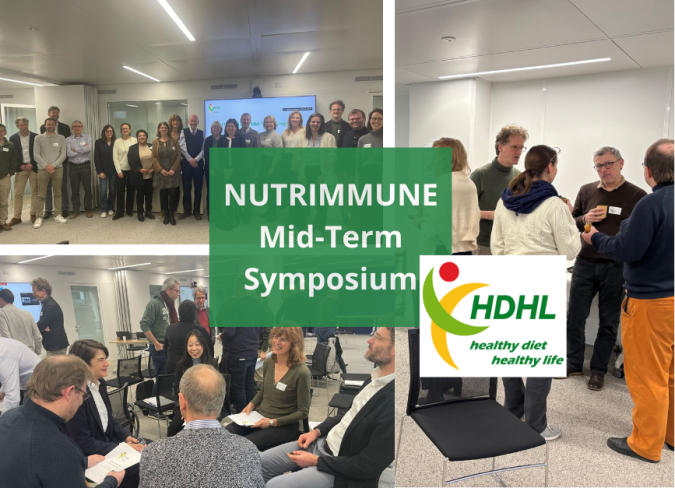
NUTRIMMUNE project results presented at mid-term symposium in Paris
On 11 February 2025, the projects funded through the...

6 projects granted under the NUTRIMMUNE call
24 research groups from 7 countries involved in 6...

NUTRIMMUNE call: six projects selected for funding
Six proposals are selected for funding under the recent...

New call expected: NUTRIMMUNE
JPI HDHL is pleased to pre-announce the launch of the...