
Zoeken op HDHL
Filters
348
results
- Image
 HDHL is thrilled to announce the successful launch of the HDHL-wide Early Career Network (ECN) during our kick-off event on Tuesday, 26th September.
 - Image
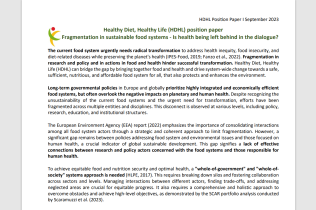 HDHL is excited to share its position paper about 'Fragmentation in a sustainable food system - Is health being left behind in the dialogue?'.
 - Image
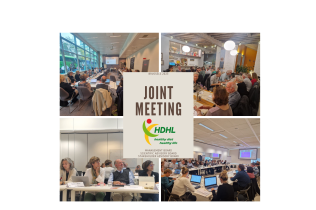 The last meeting of 2023 took place in Brussels. The meeting agenda was filled with points to move forward and to look at the future of HDHL.
 - Objective assessment of dietary nutrient content is essential in weight management and life-style interventions. Increasing evidence suggests that microRNAs (miRs) may be useful as biomarkers of nutritional status. The miRs are short non-coding RNAs that can be released by cells and circulate within the blood in a remarkably stable form. Modulation of circulating miR as well as tissue levels have…
- Food questionnaires and/or food diaries are commonly used to measure dietary intake in population based studies. Biomarkers, however, may provide more reliable intake measures than self-reported data. Unfortunately, only very few food biomarkers have been sufficiently validated.In December 2014, the JPI HDHL Food Biomarkers Alliance (FOODBALL) project commenced, which aims to develop strategies…
- Nutritional studies increasingly use new technologies that result in large data sets. The power of these technologies is that many parts of the human physiology are described, but makes it difficult for researchers to properly interpret the outcomes. Part of this problem is caused by the fact that the number of parameters measured is much greater than the number of participants in the survey…
- The project aimed at evaluating the specific role of selenium (Se) in relation to other nutrients and trace elements in favoring brain and behavioral plasticity. The central hypothesis tested is the role of oxidative stress and inflammation as key processes connecting diet, peripheral tissues and brain development. In our experimental models, pregnant and lactating female rats and their offspring…
- Mitochondria represent central regulators of nutritional homeostasis and of the aging process. Epidemiological studies, including data from our cohort, indicate nutritional risk and preventive factors associated with dietary intake for the development of age-related parameters. Notably, studies from this network revealed the importance of a finely tuned mitochondria-autophagy axis as a preventive…
- Recognition and understanding of intentions are key processes in social cognition. An important neuromodulator regulating social cognition is serotonin, the precursor of which is the essential amino acid tryptophan (TRP). Altered serotonin availability and metabolization is hypothesized for several mental problems, physical illnesses and further also for elderly individuals. Reduced TRP…
- Understanding how diet modifies cognitive ageing represents the next frontiers for developing prevention strategies. A key may rely on elucidating the exact combination of dietary bioactives capable of modulating cognitive decline via brain plasticity, a major compensatory mechanism to maintain cognitive function. Another important question is the sensitive population in which such nutritional…
- The aged brain is particularly vulnerable to stress-induced cognitive decline and will benefit tremendously from mechanistically-oriented dietary interventions to attenuate such cognitive impairment and to provide a general boost to brain health. Moreover, cognitive decline is increasingly present in the ageing population, who are living with chronic diseases and subjected to elevated levels of…
- Determinants of Diet and Physical Activity; Knowledge Hub to integrate and develop infrastructure for research across Europe: From December 2013 until December 2016 the research network ‘DEDIPAC’ was active. DEDIPAC stands for ‘DEterminants of DIet and Physical ACtivity’. The main goal of DEDIPAC was to establish a research network (Knowledge Hub) of researchers from different countries and…