
Zoeken op HDHL
Filters
203
results found for 'Food for health'.
- An increased intestinal permeability (IP), also known as leaky gut, could be responsible for activation of the immune system and inflammation, a common mechanism in many chronic age-related diseases. The MaPLE project tested the hypothesis that an increased intake of polyphenol-rich foods can reduce IP and the quantity of inflammogenic bacterial factors in the bloodstream, promoting a protective…
- Cumulative evidence suggests that food allergy (FA) is associated with a multitude of environmental factors including hygiene habits, antibiotic use, lifestyle changes and, in particular, diet. Changes in nutrition can result in dysbiosis of the skin, gut, and lung microbiota and generate changes in microbial the metabolites produced, which may in turn produce epigenetic modifications. Current…
- Image
 The HDHL Management Board, Stakeholder Advisory Board, and Scientific Advisory Board came together this week in Florence, Italy to discuss the future of HDHL.
 - Image
 The 6th international conference of the Joint Programming Initiative ‘A Healthy Diet for a Healthy Life’ will take place digitally on April 20 and 21, 2021.
 - Cardiovascular and metabolic diseases are a primary cause of morbidity and mortality worldwide. Diet is a major risk factor for cardio-metabolic health, but is challenging to study in part because metabolic response to diet is highly individualised. Characterising the molecular pathways that mediate personalised responses to diet is critical to effectively tackle the current epidemic. Epigenetic…
- Image
 As Béatrice Morio concludes her six-year tenure as Chair of Healthy Diet, Healthy Life (HDHL), we reflect on a period marked by transition, key strategic choices, and lasting impact. In this article, Béatrice shares her reflections on her role that began on the brink of a global crisis and grew into a story of continuity and repositioning.
 - Background and aim There is an urgent need to find reliable early biomarkers of the cardiometabolic syndrome (CardMetS) allowing intervention before irreversible damage develops while assessing the efficacy of nutritional prevention. Oxylipins could be relevant candidate biomarkers thanks to their involvement in the homeostatic regulation of various process related to the cardiometabolic status…
- Background and aimFAME aimed to a) identify novel lipidomics biomarkers as biomarkers of fatty acid status and of future cardiometabolic clinical events, b) establish relationships between diet and tissue status of fatty acids as explanatory factors for diet relationships with cardiometabolic health, and c) to investigate genetic determinants of fatty acid status and metabolism which modify the…
- Image
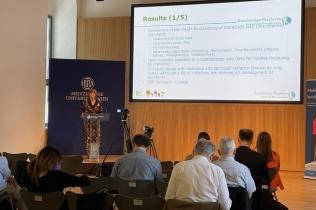 The intestinal microbiome project results were presented during the Healthy Microbiome Symposium in May 2022, at the Medical University of Vienna. HDHL asked Jildau Bouwman, coordinator of the Knowledge Platform, to reflect on the symposium and the future of microbiome research.
 - PROtein enriched MEDiterranean diet to combat undernutrition and promote healthy neuroCOGnitive ageing in older adults
- Background and aimHEALTHMARK investigated the complex associations between diet, microbiota, tryptophan metabolites of microbial metabolism, and metabolic health in a set-up of identification, replication, and validation of associations. The project, organized in five work packages (WP) comprised two observational and two intervention studies.In WP1, the University of Bonn (UB) using the DOrtmund…
- Image
 HDHL welcomes EPHA as new member of the Stakeholder Advisory Board (SHAB)!