
Zoeken op HDHL
Filters
99
results found for 'Food system'.
- Image
 Today is World Diabetes Day, highlighting the urgent need to tackle this global health crisis. The International Diabetes Federation, WHO, and UN are leading a global campaign focused on this year's theme: "Access to Diabetes Care." This day underscores the importance of ensuring treatment and support are available to millions worldwide.
 - Nutrition and Cognitive Function In 2015, the JPI HDHL launched the Joint Action: Nutrition and Cognitive Function (NutriCog). The five funded projects started in the first half of 2016 for a period of 3 years.
- Image
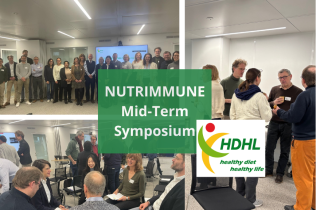 On 11 February 2025, the projects funded through the NUTRIMMUNE call held their mid-term symposium at the headquarters of the French National Research Agency (ANR) in Paris. The symposium presented an excellent opportunity for the projects to share their progress and results to date.
 - Determinants of Diet and Physical Activity Knowledge Hub In 2012, the JPI HDHL launched its first Joint Action: Knowledge Hub on Determinants of Diet and Physical Activity Knowledge Hub (DEDIPAC KH). DEDIPAC started in 2014 and finished in 2016.
- The aged brain is particularly vulnerable to stress-induced cognitive decline and will benefit tremendously from mechanistically-oriented dietary interventions to attenuate such cognitive impairment and to provide a general boost to brain health. Moreover, cognitive decline is increasingly present in the ageing population, who are living with chronic diseases and subjected to elevated levels of…
- HDHL-INTIMIC (INtesTInal MICrobiomics) aims to coordinate national and regional programmes in the area of diet, intestinal microbiomics and health as well as nutrition and health in general, thereby contributing to the implementation of Healthy Diet, Healthy Life (HDHL) objectives.
- Background and aimBile acids (BA) through G protein-coupled bile acid receptor 1 (GPBAR1 or TGR5) and nuclear receptors like Farnesoid X receptor (FXR) regulate mammalian inflammation, and lipid, glucose, energy, and xenobiotic metabolism. The gut microbiota modulates the enterohepatic circulation of BA and microbially produced secondary BA appear to be more potent receptor agonists than primary…
- The human gut microbiota has been linked with incidence and progression of noncommunicable diseases and their riskfactors. Moreover, diet has been identified as an important modulator of microbiota composition and function, but responsesvary across individuals.DiGuMet aimed to explore how gut microbiota interacts with diet and the role of such interactions for cardiometabolic diseaserisk and to…
- Dietary Patterns in the Ageing European Population: an Interdisciplinary Approach to combat Overweight-Related Metabolic Diseases. The EURODIET project Image AbstractAn epidemic of overweight/obesity, metabolic syndrome and cardio-metabolic diseases is emerging at planetary level, and healthy nutrition represents a critical help to…
- Image
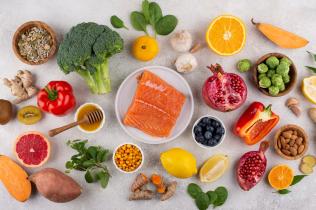 How policies can protect the health and life of millions: BREMEN, Germany, November 29, 2022 – The covid-19-pandemic may give a different impression, but non-communicable diseases are by far the leading cause of disability and death in Europe.
 - Determinants of Diet and Physical Activity; Knowledge Hub to integrate and develop infrastructure for research across Europe: From December 2013 until December 2016 the research network ‘DEDIPAC’ was active. DEDIPAC stands for ‘DEterminants of DIet and Physical ACtivity’. The main goal of DEDIPAC was to establish a research network (Knowledge Hub) of researchers from different countries and…